Participation in sports provides numerous physical, mental, and social benefits, but it also introduces the risk of facial and oral injuries. As an oral and maxillofacial surgeon, I have treated athletes of all ages and levels who have experienced trauma ranging from minor dental fractures to complex facial fractures. Protecting oral health in the context of sports requires not only preventive strategies but also an understanding of the intricate anatomy of the face, jaw, and dentition. My experience in hospital-based training and decades of practice in multiple surgical centers have reinforced the importance of integrating education, prevention, and timely intervention to preserve both function and aesthetics.
The Prevalence and Types of Sports-Related Oral Injuries
Facial injuries in sports are more common than many realize, occurring across contact sports such as football, hockey, basketball, and martial arts, as well as in recreational activities like cycling, skiing, and skateboarding. Common injuries include lacerations to the lips and soft tissue, dental fractures, avulsed or displaced teeth, and fractures of the jaw or cheekbones. These injuries not only pose immediate functional and aesthetic challenges but can also have long-term consequences if not properly managed.
Dental trauma, in particular, is a frequent outcome of sports accidents. Teeth can be chipped, cracked, or completely knocked out. Beyond the obvious cosmetic impact, such injuries may compromise bite alignment, occlusion, and long-term oral health. As a specialist trained in oral and maxillofacial surgery, my approach emphasizes both acute management and the planning of definitive care to restore function and appearance. This includes evaluation of bone integrity, soft tissue repair, and, when necessary, surgical intervention to ensure proper healing.
Preventive Measures: Mouthguards and Protective Gear
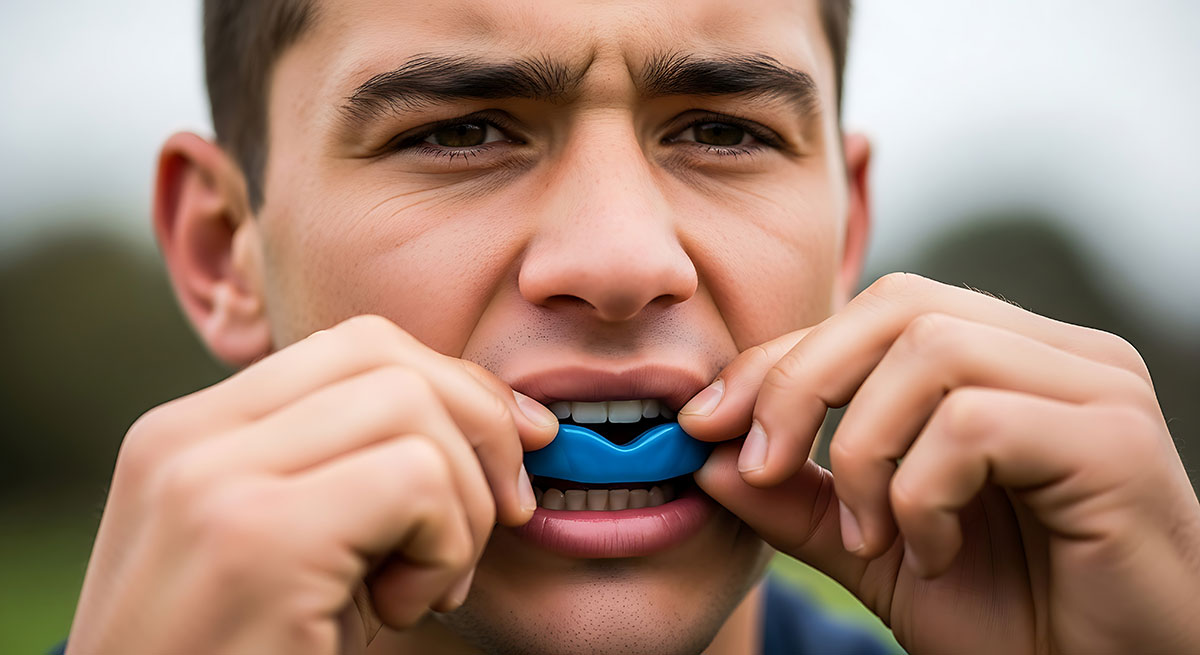
Prevention is always preferable to treatment, and one of the most effective strategies for protecting the oral cavity during sports is the use of properly fitted mouthguards. Custom-fabricated mouthguards, as opposed to over-the-counter models, offer superior protection, comfort, and retention. They absorb and distribute the forces of impact, reducing the risk of tooth fractures, soft tissue lacerations, and even concussions in some cases.
Protective helmets, face shields, and sport-specific gear also play a critical role in safeguarding athletes. The design and fit of equipment should be tailored to the sport, the level of competition, and the individual athlete’s facial anatomy. These measures reflect the same principles I apply in surgical planning, where precision, individualized assessment, and understanding of anatomy are paramount.
The Role of Timely Intervention
Despite the best preventive efforts, injuries can still occur. Prompt assessment and intervention are crucial to optimize outcomes. For example, a knocked-out tooth can often be successfully replanted if addressed within a limited timeframe, but delays can compromise prognosis. Fractures of the jaw or orbital region require careful evaluation using imaging modalities and sometimes surgical reconstruction to restore both function and facial symmetry.
In my practice, I emphasize patient education on immediate post-injury care, such as controlling bleeding, preserving avulsed teeth in appropriate solutions, and seeking urgent evaluation. Early intervention not only improves functional outcomes but also reduces the likelihood of complications such as infection, malocclusion, or aesthetic deformities.
Long-Term Considerations for Athletes
Athletes who sustain facial trauma require ongoing monitoring to ensure proper healing and to identify any secondary complications. Even after recovery, patients may benefit from preventive dental care, orthodontic evaluation, and protective strategies for future activity. Integrating routine follow-up and long-term planning mirrors the broader principles of oral and maxillofacial surgery, where careful assessment, individualized care, and evidence-based strategies converge to produce optimal outcomes.
The Importance of Education and Awareness
Education plays a central role in reducing sports-related oral injuries. Athletes, coaches, and parents should be aware of the risks and the strategies available to mitigate them. Instruction on proper mouthguard use, safe techniques, and awareness of environmental hazards contributes significantly to the prevention of injury. My experience working with diverse patient populations has shown that when athletes understand both the risks and the solutions, adherence to preventive measures increases dramatically.
Subtle Insights from a Sports Enthusiast
As someone who follows professional sports and supports teams such as the New York Giants, Knicks, and Yankees, I have observed firsthand the prevalence of facial injuries at all levels of competition. These experiences inform my approach to patient care, highlighting the need for individualized preventive strategies and evidence-based intervention. While my perspective is grounded in surgical expertise, it is also shaped by a recognition of the physical demands and inherent risks associated with athletic activity.
Conclusion
Protecting oral health in the context of sports requires a multidimensional approach that includes prevention, timely intervention, and long-term planning. Oral and maxillofacial surgery is uniquely positioned to address the complex interplay between facial anatomy, dental integrity, and systemic health, ensuring that injuries are managed with both precision and foresight. By integrating preventive education, individualized care, and advanced surgical techniques, athletes can maintain both the health and aesthetics of their smiles, on and off the field. For those engaged in sports at any level, understanding these principles is essential not only for immediate injury management but also for long-term oral health and overall well-being.